Globale Risiken durch Russland und China
13.05.2026 um 12:37Ja, in ihrer Selbstdarstellung (aka Propaganda) ist das so. China sieht das in der Selbstdarstellung genauso.Jedimindtricks schrieb:und Russland begreift sich als antikolonialmacht
Ja, in ihrer Selbstdarstellung (aka Propaganda) ist das so. China sieht das in der Selbstdarstellung genauso.
Ok, dann solltest du das klarer kennzeichnen. Da war ich nämlich auch verwirrt.Panaetius schrieb:Ja, in ihrer Selbstdarstellung (aka Propaganda) ist das so
Doch, das geht.
StudyQuelle: https://gppi.net/2026/05/12/out-of-the-dependency-trap
Out of the Dependency Trap
Why Germany’s and Europe’s Critical Raw Materials Policy Falls Short and How to Fix It
By
Florian Klumpp, Jakob Hensing, Thorsten Benner, Louca Derville
12 May 2026
Concerns over CRM dependencies are not new and have resulted in several past attempts to foster resilience in the face of such dependency. Given this legacy, it is striking that Germany and Europe find themselves in such a tight spot today. Where did these past efforts fall short? And do Berlin and Brussels’s most recent measures finally address these key shortcomings? We seek to answer these questions, also building on learnings from other countries such as Japan and the US.Quelle: ebenda
We find that Germany and Europe’s policy approaches are still too strongly based on the false assumption that improving framework conditions for private-sector projects in Europe and elsewhere in the world will suffice to drive supply diversification. This assumption is misaligned with the reality of China’s state-backed, vertically integrated dominance that allows Beijing to shape prices and supply conditions. As a result, policies focused primarily on stimulating supply through permitting reform, financial derisking and project support in partner countries are insufficient. Other players such as Japan and the United States (US) have responded with greater resolve, deploying tools such as coordinated offtake agreements and price-support mechanisms to actively shape market dynamics. Europe’s failure to take similar steps reflects persistent misconceptions about global CRM markets, alongside fragmented and insufficient capacity in public institutions and a weak CRM ecosystem.
Germany and Europe must therefore pursue a more determined, market-shaping strategy.Und wie kommt man dahin?
Three strands of action are key: ...
Delivering on this ambitious agenda will require significant changes in governance and implementation:Quelle: ebenda
1. Lead by example in driving EU action: As a key EU member state, Germany should support a strong mandate for the proposed EU CRM Centre and decision-making processes that grant the European Commission sufficient leeway to drive implementation. It should also lead an initiative to pool national CRM-related funds to enable joint demand and price interventions at the European level. At the same time, Berlin should bring together flexible member state coalitions to build momentum and demonstrate feasibility, as well as move ahead with determination on initiatives that can be realized at the national level ...
Europe’s CRM challenge is not primarily one of geological scarcity, but rather marked by captured market structures. Overcoming it will require a shift toward an integrated strategy that actively shapes markets – particularly by creating stable demand and viable price signals for non-China supply – and aligns public and private actors. The costs of such an approach are significant, but they pale in comparison to the economic and political costs of continued dependence on China. This urgent and overdue investment in European resilience will pay outsized dividends.
creating stable demand and viable price signals for non-China supplyAm Ende des Tages heißt das, dass die EU / Deutschland China nicht vertrauen kann und darf. Es muss mit verschiedenen Methoden sich andere Märkte erschließen.
Zuvor hatte die „South China Morning Post“ unter Berufung auf eigene Quellen berichtet, dass der Besuch für den 20. Mai geplant sei. Das chinesische Außenministerium bestätigte das Datum auf Nachfrage nicht.Quelle: https://www.handelsblatt.com/politik/international/russland-kreml-kuendigt-baldige-putin-reise-nach-china-an/100225343.html
Zum ersten, ja,
Sonst würde - so das Fazit - die EU am Ende draufzahlen müssen - wenn die EU erst beginnt, sich Handel mit neuen Quellen zu erschließen, wenn es zu spät ist.
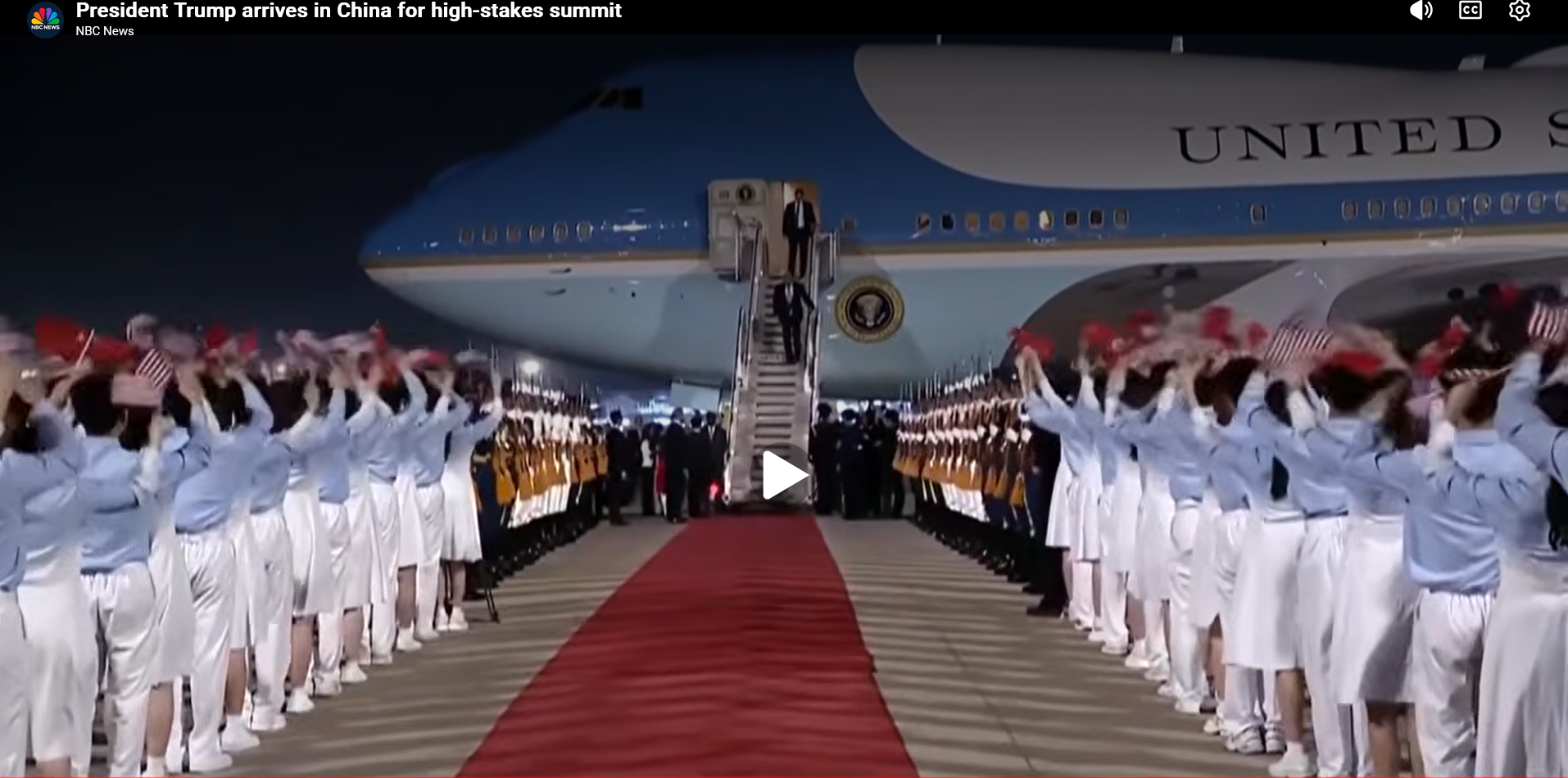
Der Besuch von Trump bei Xi Jingping ist derweil vorbei
Wir dürfen uns keinen Illusionen hingeben. Die derzeitige Annäherung wird die Beziehungen zwischen den USA und China nur kurzfristig stabilisieren. Die strukturellen Probleme bleiben bestehen. Der Iran-Krieg mit der De-facto-Schließung der Straße von Hormus bleibt ein ungelöstes Problem. Und es ist sehr unwahrscheinlich, dass Xi Trump aus der Patsche helfen wird. In Deutschland wird oft übersehen, dass Peking den zentralen Akteur in der Achse der Autokratien darstellt. Ohne Pekings diplomatische, finanzielle, wirtschaftliche und technologische Unterstützung könnte Putin seinen völkerrechtswidrigen Krieg gegen die Ukraine nicht fortsetzen. Auch hier hält die Kommunistische Partei Chinas die Zügel in der Hand.Quelle: https://www.n-tv.de/politik/politik_kommentare/Trump-verzwergt-die-USA-als-Supermacht-id30823671.html
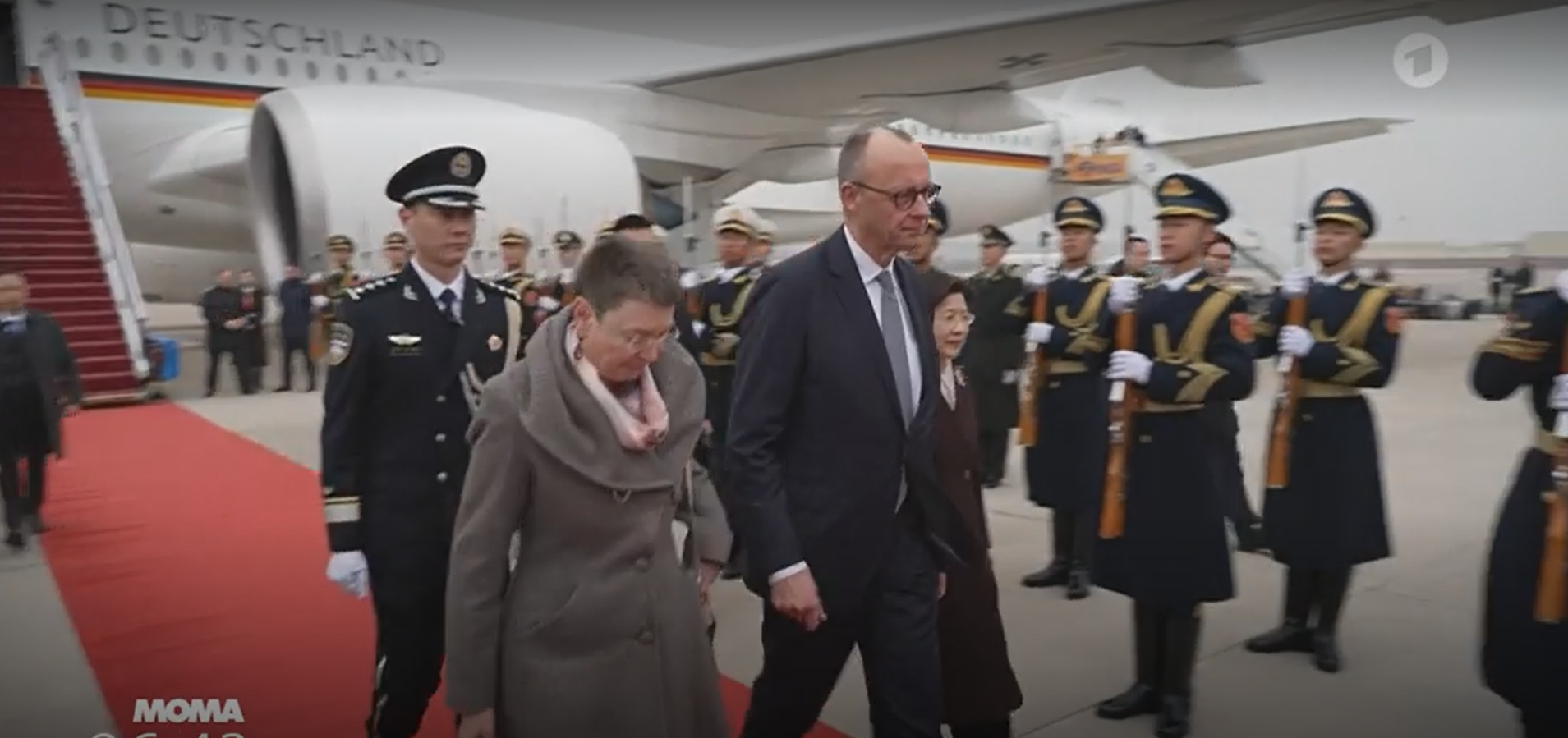
Aber neben Russland hat die Parteiführung noch einen zweiten Proxy. Mit dem Aufkaufen billigen iranischen Öls wurde Teheran jahrelang gestützt. Chinesische IT-Firmen haben das iranische Regime dabei unterstützt, einen technologisch hochentwickelten Überwachungsstaat aufzubauen. Und Berichten zufolge sollen Satellitenbilder aus China iranischen Streitkräften bei Schlägen gegen die USA geholfen haben. Die Entsendung nordkoreanischer Soldaten nach Russland zum Kampf gegen die Ukraine dürfte von China gebilligt worden sein. Es ist daher kaum nachvollziehbar, wenn westliche Politiker - ob Merz oder jetzt Trump - in Peking einen verlässlichen Partner sehen. Der Westen kehrt aus kurzfristigem ökonomischem Opportunismus zu einer China-Politik zurück, die in erster Linie den Interessen Pekings dient. So untergräbt er die eigene strategische Position und hilft der Regierung in Peking, ihre weltumspannenden Ziele zu erreichen.
Die Weltlage malte der Oppositionsführer in düsteren Farben. Man erlebe mehr als eine "Zeitenwende" (den Begriff hatte Bundeskanzler Scholz geprägt), sondern einen "Epochenbruch". Nicht nur der Angriff Russlands auf die Ukraine zeige: "Wir sind Zeugen einer Erosion der Prinzipien der liberalen, regelbasierten Ordnung." Russland, China, der Iran und Nordkorea arbeiteten zusammen in einer "revanchistischen, antiliberalen Achse". Russland habe es auf weit mehr als die Ukraine abgesehen, und bald könnten atomare nordkoreanische Interkontinentalraketen Nordamerika erreichen.Quelle: https://www.dw.com/de/friedrich-merz-will-neuausrichtung-der-au%C3%9Fenpolitik/a-71395099
Is Germany Going to Walk its Tough China Talk?Quelle: https://cepa.org/article/is-germany-going-to-walk-its-tough-china-talk/
After years of appeasement, Berlin’s attitude to China is hardening. But concrete actions remain elusive.
By Reinhard Bütikofer
October 6, 2025
Merz has toughened Germany’s stance on China. While many European leaders have made pilgrimages to Beijing, Merz postponed a visit. His first telephone call with Chinese leader Xi Jinping took place more than two weeks after taking office. During the phone call, the Chancellor pressed for Chinese support for a Ukraine ceasefire and for “fair economic competition and reciprocity.”Quelle: ebd.
Merz also offers clear support to Taiwan, seeing Germany’s China policy in the context of “a new systemic conflict” between “liberal democracies and an axis of autocracies.”
Foreign Minister Johann Wadephul shares this skepticism of China. During his meeting this summer with Chinese counterpart Wang Yi, he raised the issue of Chinese support of Russia’s war in Ukraine, rejecting Wang Yi’s plea for a “comprehensive strategic partnership.” Minister Wadephul criticized China’s activities in the South China Sea. saying they “not only threaten Asian security, but also undermine the rules-based global order” and “directly impact German and European interests.” When Beijing protested against that language, Wadephul doubled down.
Despite these tough political messages, legitimate questions remain unanswered.
A Mittelstand-oriented German trade and investment policy would take a tough anti-China line. In a striking June 2025 strategy paper, the VDMA trade association, traditionally a free trade promoter, advocated protecting European industry. Its slogan: “China does not play fair – we need a political reaction.” Their recipe is clear. Impose tariffs. Insist on local content rules. Make sure that Chinese imports abide by European standards.Quelle: ebd.
A recent business survey organized by BDI, the German Federation of Industry, questioned German businesses about competition with China. Although the auto lobby insisted on keeping the results secret, a leak revealed that steel, biotech, chemical, medical technology, machinery, textiles, and telecom respondents described a darkening landscape because of the “aggressive pricing policies by state-supported Chinese companies.”
The BDI findings and the VDMA paper should have provoked a nationwide debate over Germany’s industrial future. That has not happened. Not in the media. Not in parliament. No government minister has spoken up. The new German government came into office promising to stand up against China. But the risk remains that it will just talk tough and continue muddling through.
Reinhard Bütikofer is a Senior Fellow with the Tech Policy Program at the Center for European Policy Analysis. Bütikofer previously served as a Member of the European Parliament (2009-2024) and was a prominent leader of the European Green Party.
EU Commission plans new squeeze on Chinese tradeQuelle: https://www.politico.eu/article/eu-commission-reduce-economic-dependence-chinese-trade-plan/
The proposals will be put to European leaders at a summit next month, officials say.
The departure of Hungarian Prime Minister Viktor Orbán, who courted China for investment, also creates a new opportunity for officials to get sign-off on the plans. However, Spanish Prime Minister Pedro Sánchez, who made his fourth visit to China in as many years in April, is positioning himself as a leading advocate for friendlier relations with Beijing.Quelle: ebd.
Fear of deindustrialization has gripped Brussels, ...
The Commission’s proposed Industrial Accelerator Act would see tough new screening rules on Chinese investment, while a revision of the Cybersecurity Act aims to push European capitals to reduce their use of Chinese tech champions such as Huawei. Beijing has threatened retaliation in response.
However, if it wants to meaningfully dent the growing trade imbalance, the Commission would need new trade powers to stem the flow of Chinese goods into the single market.
While the Commission has long sought new powers to deal with the issue, some capitals have actively resisted the push, as it could roil relations with Beijing.Quelle: ebd.
Securing the support of Germany, which has historically sought to avoid trade escalation with China, would be key. Berlin is suffering industrial decline as Beijing strengthens its hold on clean technology, carmaking and manufacturing sectors — and is particularly exposed to any new restrictions on rare earth sales.
Bei dem Besuch sollen Putin und Xi demnach über die Beziehungen ihrer Länder sprechen und sich über internationale wie regionale Probleme austauschen.Quelle: https://www.spiegel.de/ausland/wladimir-putin-bei-xi-jinping-in-china-staatsbesuch-kurz-nach-donald-trump-angekuendigt-a-a313e761-847d-45e5-92c2-c6621be1d27c
Das ist jetzt nicht so ungewöhnlich, ich weiß gar nicht, wie oft sich Putin und Xi seit Februar 2022 schon getroffen und ausgetauscht haben; das müsste im deutlich zweistelligen Bereich liegen, die Zahl.
Russia and China’s Shadow War in EuropeQuelle: https://cepa.org/comprehensive-reports/russia-and-chinas-shadow-war-in-europe/
IntroductionQuelle: https://cepa.org/comprehensive-reports/war-without-end-russias-shadow-warfare/
Sam Greene
Severed cables. Disrupted aviation. Arson. Sabotage. Assassination. Infiltration. Attacks designed to distract, to confuse, and to dismay an adversary – but not to provoke a response. Such is shadow warfare, causing damage and costing lives but operating below the traditional threshold of war.
Shadow War as System, Not Strategy
Even as Ukraine continues to suffer under wave after wave of bombardment and an ever deepening occupation of its eastern and southern territory, Europe as a whole is under a sustained assault of a different kind. Earlier this year, the Center for European Policy Analysis (CEPA) launched a major new project—Defend, Deny, Deter: Countering Russia’s Shadow Warfare— ...
Russian and Chinese channels cross-promote disinformation about sanctions, NATO, and Western support for Ukraine. This alignment strengthens Russia’s capacity to manipulate public opinion and exploit democratic vulnerabilities.Quelle: https://cepa.org/comprehensive-reports/russia-and-chinas-shadow-war-in-europe/
China has invested tens of billions of dollars to influence global public opinion, using tools such as large-scale people-to-people exchanges, extensive cultural programs, and worldwide media operations. Some estimates place its international media spending alone at about $10 billion. Chinese companies are also working with state institutions on new technologies like generative AI and virtual reality, which could make these influence efforts even more powerful both by bringing them to scale and enabling more targeted and convincing ways to shape how people understand events.16 Russia is estimated to spend more than $300 million each year on RT alone, with its total international information efforts reaching about $1.5 billion.17
The cooperation in the information sphere is illustrative of a larger point.
The “Shared Consciousness” Between Moscow and BeijingQuelle: https://cepa.org/comprehensive-reports/russia-and-chinas-shadow-war-in-europe/
Russia and China are revisionist powers that are working hard to reshape the international landscape in ways that suit their values and interests. When Xi Jinping became China’s top leader in 2012 many observers viewed China mainly as an opportunity rather than a threat. Since then, much more has been revealed and is now understood about the regime’s predatory character. For more than a dozen years, the personal relationship forged by Xi Jinping and Vladimir Putin has led to a shared consciousness between them that has set their respective systems on a course with more purpose.19
A year after Russia’s full-scale invasion of Ukraine, in March 2023, Xi told Putin that “right now there are changes—the likes of which we haven’t seen for 100 years—and we are the ones driving these changes together”. Putin agreed. The leaders of these two authoritarian behemoths did not make clear the exact meaning of this ominous prediction ...
Their goal is to weaken global confidence in democracy, while growing the ranks of unfree countries. In the end, they aim to fracture and isolate democratic societies so thoroughly that an authoritarian model encounters no unified opposition.
Thank you for your attention.
Dazu gab es heute einen weiteren Bericht (Welt).
Bericht: China bildet russische Soldaten für Ukraine-Krieg ausAuch da (das mit den Dual-Use-Gütern ist schon länger bekannt, siehe auch den Beitrag von mir aus dem anderen Thread, den du dann hierüber geholt hattest)
Berlin (dts Nachrichtenagentur) - Die chinesischen Streitkräfte sollen einem Medienbericht zufolge russisches Militärpersonal für den Krieg in der Ukraine ausbilden. Wie die "Welt" schreibt, geht dies aus geheim eingestuften Dokumenten europäischer Nachrichtendienste hervor.
Chinas Inszenierung als neutrale Großmacht im russischen Angriffskrieg gegen die Ukraine gerät damit zunehmend unter Druck. Bereits Pekings 2023 vorgestellter Zwölf-Punkte-Plan zur Vermittlung zwischen Moskau und Kiew war in Europa auf Skepsis gestoßen. Die nun bekannt gewordene Ausbildungskooperation sowie umfangreiche Lieferungen chinesischer Dual-Use-Güter an Russland nähren weitere Zweifel an Pekings behaupteter Neutralität.Quelle: https://www.msn.com/de-de/nachrichten/welt/bericht-china-bildet-russische-soldaten-f%C3%BCr-ukraine-krieg-aus/ar-AA23yVWY

@Panaetius
So sieht es aus. Das alles muss ihm aber schon vor Reiseantritt bewusst gewesen sein.
Marcos says Philippines would be involved in any Taiwan conflictQuelle: https://www.msn.com/en-us/money/other/marcos-says-philippines-would-be-involved-in-any-taiwan-conflict/ar-AA23wB00
Story by Cliff Venzon
(Bloomberg) -- The Philippines would likely be involved in any conflict over Taiwan due to its proximity to the island democracy claimed by China, President Ferdinand Marcos Jr. said, reiterating a stance that risks angering Beijing.
“In the Philippines, we do not have a choice because Taiwan is so close to the Philippines and we have almost 200,000 Filipino nationals living and working in Taiwan,” Marcos said in an interview with Japanese media in Manila on Monday.
SEOUL, South Korea (AP) — South Korean President Lee Jae Myung and Japanese Prime Minister Sanae Takaichi held their fourth meeting in about six months on Tuesday, underscoring the need for greater cooperation between the historical Asian rivals amid global challenges, including the Iran war.Quelle: https://apnews.com/article/south-korea-japan-lee-takaichi-b18892cf855a2c071b65d35861886972
Lee hosted Takaichi in his hometown of Andong, a southeastern South Korean city famous for its centuries-old traditional folk village, a UNESCO World Heritage site. In January, the two met in Takaichi’s hometown of Nara, an ancient Japanese capital.
Their goal is to weaken global confidence in democracy, while growing the ranks of unfree countries. In the end, they aim to fracture and isolate democratic societies so thoroughly that an authoritarian model encounters no unified opposition.Quelle: https://cepa.org/comprehensive-reports/russia-and-chinas-shadow-war-in-europe/
Ich glaube auch, dass die Ukraine auf dem Verhandlungstisch stand - Trump wird Xi den Rücken gestärkt haben, dass China weiter Russland unterstützen kann. Und das kann jetzt Putin persönlich mit Xi besprechen. Nur so ergibt die Reihenfolge der Treffen Sinn.
Vielleicht sollte diese sich halt auch mal wieder darauf konzentrieren gute Autos zu produzieren...
BYD will in nicht ausgelasteten VW-Werken produzieren. Bringen die ihre billigen Arbeiter und Strom mit, oder warum geht das bei denen?
 Original anzeigen (1,5 MB)
 Original anzeigen (1,8 MB)
 Original anzeigen (1,9 MB)
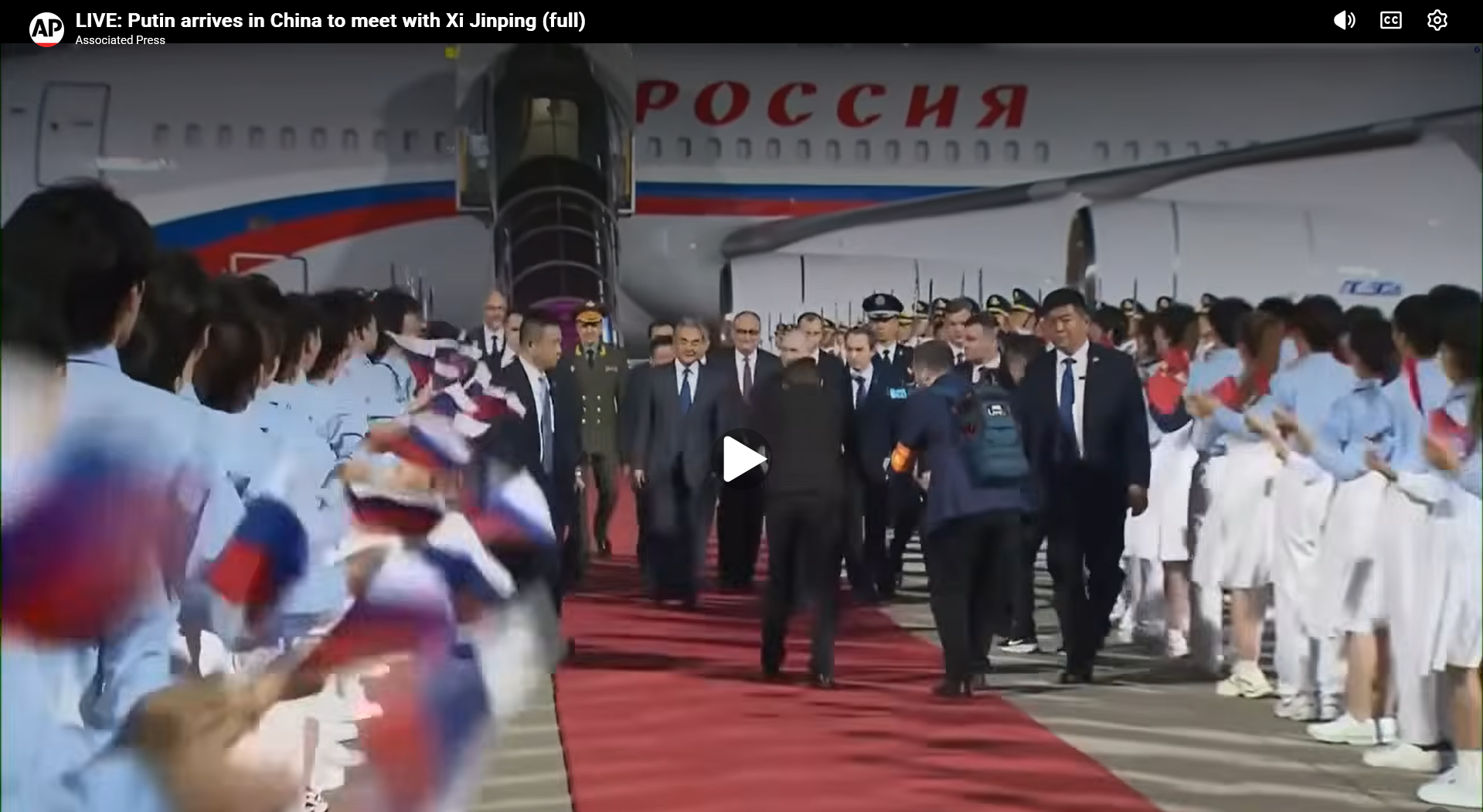
Chinese soldiers stood in position as a military band played the Russian and Chinese national anthems for the leaders in central Beijing. Children waving Russian and Chinese flags and cheered “Welcome, welcome!” in Chinese, before the pair entered the Great Hall.Quelle: https://www.theguardian.com/world/2026/may/20/china-russia-xi-jinping-vladimir-putin-meet-beijing-after-trump-visit
The scene was reminiscent of Trump’s high-profile meeting with Xi in Beijing last week, when the leaders of the world’s two largest economies discussed issues from trade and investment, to the Iran conflict and Taiwan.
Putin verwies zudem auf den stark gewachsenen bilateralen Handel, der seit Jahren bei über 200 Milliarden US-Dollar liege, und nannte als weitere Prioritäten gemeinsame Projekte in Industrie, Landwirtschaft, Verkehr und Hochtechnologie.Quelle: https://www.spiegel.de/ausland/chinas-praesident-xi-jingping-und-russlands-praesident-wladimir-putin-bekraeftigen-strategische-partnerschaft-a-acc44f11-62bb-405c-91ea-ee07421e70fc
China secretly trained Russian troops to operate dronesQuelle: https://theukrainianreview.info/china-secretly-trained-russian-troops-to-operate-drones/
19.05.2026
Chinese armed forces held secret training sessions for Russian soldiers at the end of last year. Around 200 military personnel took part in the program before returning to the war against Ukraine.
Details
On May 19, Reuters reported that the Chinese military trained about 200 Russian servicemen in China in late 2025. Three European intelligence agencies and documents reviewed by Reuters confirmed the information.
Beijing has positioned itself as a peace mediator in the Russian-Ukrainian war and has repeatedly claimed neutrality. However, China and Russia continued joint military exercises after Russia launched its full-scale invasion of Ukraine.
ContextQuelle: https://theukrainianreview.info/china-secretly-trained-russian-troops-to-operate-drones/
Shortly before Russia invaded Ukraine, Moscow and Beijing announced a strategic partnership. They also agreed to hold joint military exercises to strengthen coordination between their armed forces. After the start of the full-scale war, Western countries tried to isolate Russia economically and politically. China, however, helped Moscow soften the impact of sanctions by continuing to buy Russian oil, gas, and coal.
At the same time, Chinese leader Xi Jinping is expected to host Vladimir Putin on May 19 and 20. The visit will become Putin’s twenty-fifth trip to China and once again highlight the close partnership between the two countries. It also comes as Western leaders continue urging Beijing to pressure the Kremlin over the war in Ukraine.
Baltic States Reject Russian Claims of Providing Airspace for Ukrainian StrikesQuelle: https://uatv.ua/en/baltic-states-reject-russian-claims-of-providing-airspace-for-ukrainian-strikes/
Estonia, Latvia, and Lithuania have jointly rejected Russian accusations that they allowed their airspace to be used for Ukrainian drone strikes against Russian territory, UATV English reports.
In a coordinated statement issued by their foreign ministers, the Baltic states stressed that such claims are false.
“The Baltic states have never allowed their territories or airspace to be used for drone attacks on targets in the Russian Federation,” the statement said.